Translate Variable Domains Heavy Chain Antibodies into Clinical Candidates
A scientific publication co-authored by researchers from iBET’s Protein Biophysics for Drug Discovery Lab, Scripps Research, and Merck Healthcare has been recognized by Protein Science as one of the journal’s top 10% most-viewed papers published in 2024, highlighting its impact on the field of antibody engineering.
The article, titled “On the Humanization of VHHs: Prospective Case Studies, Experimental and Computational Characterization of Structural Determinants for Functionality” presents important advances in the development of camelid-derived single-domain antibodies, also known as VHHs or nanobodies, for therapeutic applications.
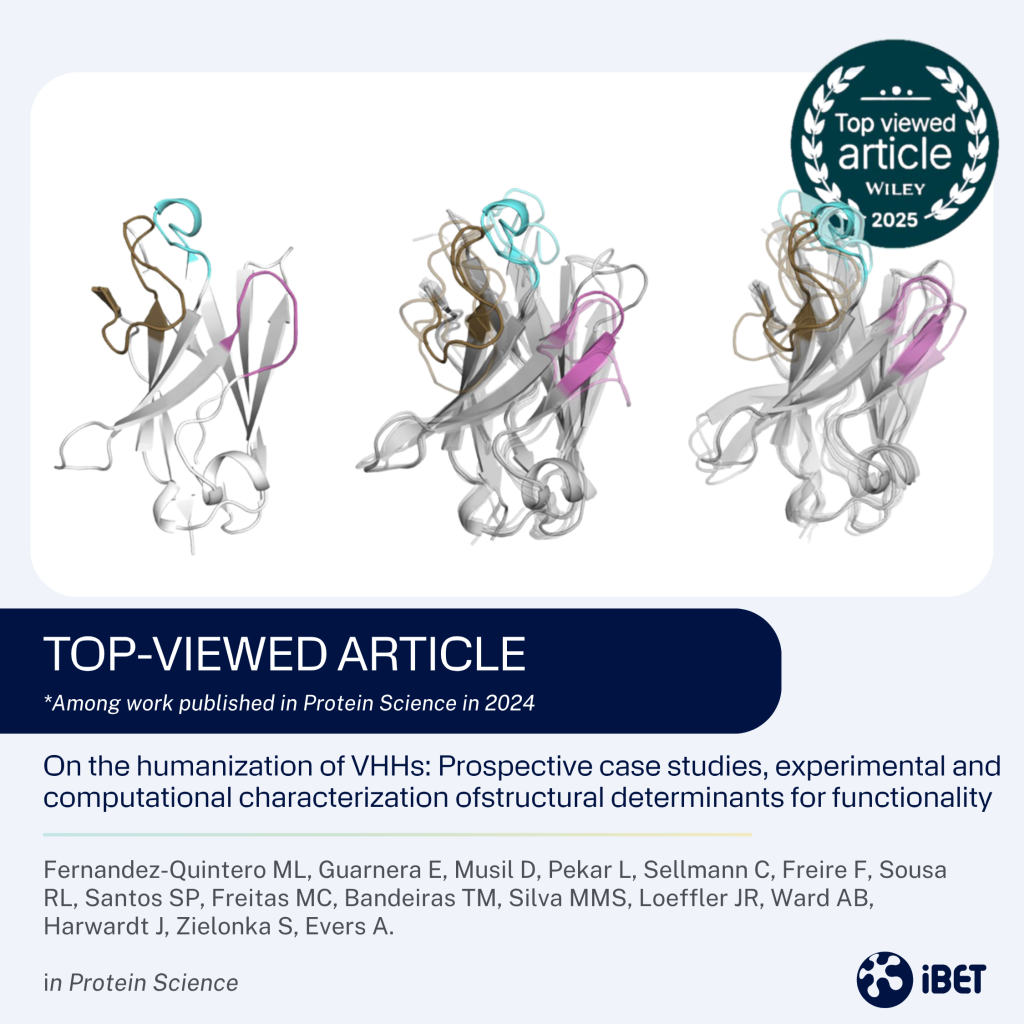
The study addresses a key challenge in the translation of Variable Domains Heavy Chain Antibodies (VHHs) into clinical candidates: humanization, the process of modifying antibodies derived from non-human species to reduce the risk of immune responses while preserving their therapeutic properties.
To better understand the factors that influence successful humanization, the research team combined a range of experimental and computational approaches, including structural biology, next-generation sequencing, and AlphaFold2-based protein structure prediction. Through prospective case studies, the researchers investigated how specific structural determinants affect antibody stability, binding affinity, and overall functionality.
The findings provide valuable insights into the design and optimization of next-generation antibody therapeutics, contributing to a growing body of knowledge that supports the development of safer and more effective biologic medicines.
Protein Science recognition highlights scientific impact and global collaboration
This recognition from Protein Science reflects both the scientific relevance of the work and the strong international collaboration between leading academic and industry partners. It also underscores iBET’s continued commitment to advancing research in protein science and drug discovery.
Congratulations to all members of the research team on this achievement and their contribution to the advancement of antibody engineering.