3D Breast Cancer model recreates key features of the tumour microenvironment
A research article authored by scientists at iBET’s 3D Human Models for Drug Discovery Lab has been recognized as one of the most-viewed publications in Advanced Biology.
The publication “Assessing Novel Antibody-Based Therapies in Reconstructive 3D Cell Models of the Tumor Microenvironment” highlights the growing impact of the institute’s work in developing innovative preclinical models for cancer research and drug discovery.
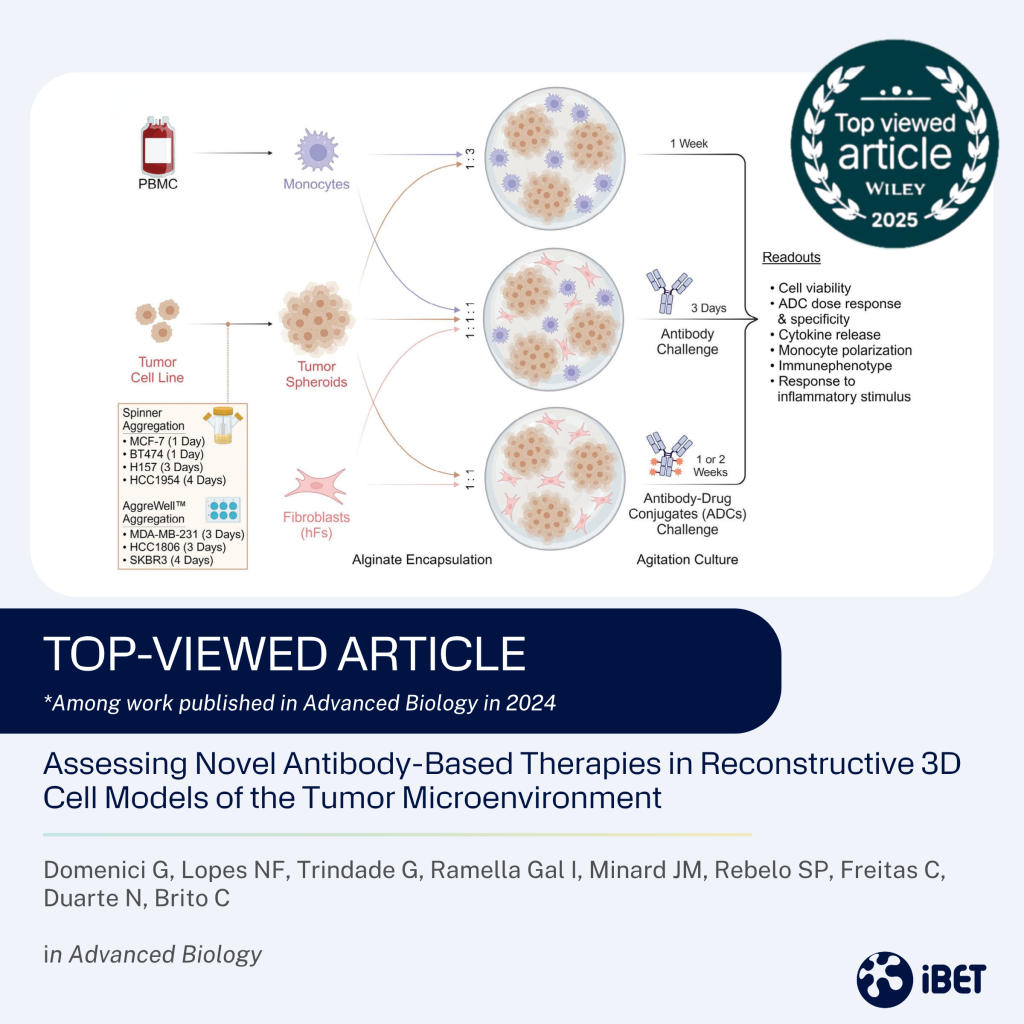
The study presents a heterotypic three-dimensional (3D) breast cancer model designed to closely replicate key aspects of the tumor microenvironment (TME). By integrating tumor cells, cancer-associated fibroblasts, and tumor-associated macrophages into a single platform, the model provides a more physiologically relevant representation of tumor biology than conventional cell culture systems.
Using this advanced 3D model, the research team evaluated the anti-tumor and immunomodulatory effects of novel antibody-based therapies targeting components of the tumor microenvironment. The work addresses a critical challenge in oncology research: improving the predictive power of preclinical testing to better reflect how therapies perform in complex human tumors.
The study demonstrates the value of advanced cell models for investigating tumor–stroma interactions and assessing emerging therapeutic strategies. By recreating the cellular complexity of the tumor microenvironment, the platform enables researchers to evaluate immunotherapies in conditions that more closely mimic human disease.
Among its key applications, the model supports the study of therapeutic approaches aimed at targeting cancer cells within structured tissue environments and provides new opportunities to understand how stromal components influence treatment outcomes. The platform is particularly relevant for the evaluation of antibody-drug conjugates (ADCs) and other antibody-based therapies, where interactions between tumor cells and surrounding tissues can significantly affect efficacy.
The research also offers insights into strategies for directly targeting the tumor microenvironment and investigating macrophage repolarization, a process through which tumor-promoting immune cells are converted into tumor-fighting cells. These approaches are increasingly recognized as promising avenues for enhancing anti-cancer immune responses and overcoming resistance to treatment.
Top-viewed article demonstrates scientific relevance
The recognition of this publication as a top-viewed article underscores the scientific relevance of iBET’s research and its contribution to advancing more predictive and translational models for oncology drug development.
Congratulations to the research team on this achievement and on their continued efforts to drive innovation in cancer research and therapeutic discovery.